Top 7 Alternatives of PaxeraUltima
Radiology teams often abandon PaxeraUltima when image access lags across multiple sites and IT tickets pile up.
That friction shows up as delayed reads, repeated uploads, and billing staff chasing scattered files. By the end of this article you will know the seven concrete factors to weigh, see how Medicai ranks against six other platforms on storage limits and workflow tools, and have a short checklist that points to the best fit for your case volume and locations.
What to Look For in PaxeraUltima Alternatives
Evaluating PaxeraUltima replacements requires focusing on seven measurable capabilities that directly impact workflow speed and diagnostic accuracy.
Upload throughput per study determines how quickly images move from modality to archive. Faster rates reduce waiting time for radiologists and improve overall turnaround.
Storage tiers in gigabytes define how much data each tier can hold. Short-term, long-term, and archive tiers require distinct capacity planning.
Viewer launch time in seconds measures how quickly a diagnostic workstation appears after study selection. Shorter delays support high-volume reading environments.
HL7 message types supported control how well a platform exchanges orders, results, and patient information with existing systems. Common messages include ADT, ORM, ORU, and SIU.
Audit log retention in months sets how long access records remain available for compliance reviews. Longer retention windows help organizations meet regulatory demands without manual archiving.
- Upload throughput per study
- Storage tier capacities measured in gigabytes
- Viewer launch time measured in seconds
- HL7 message types supported
- Audit log retention measured in months
- Multi-modality support for CT, MR, PET, and X-ray studies
- Role-based access controls for user authentication
1. Medicai - Best Overall
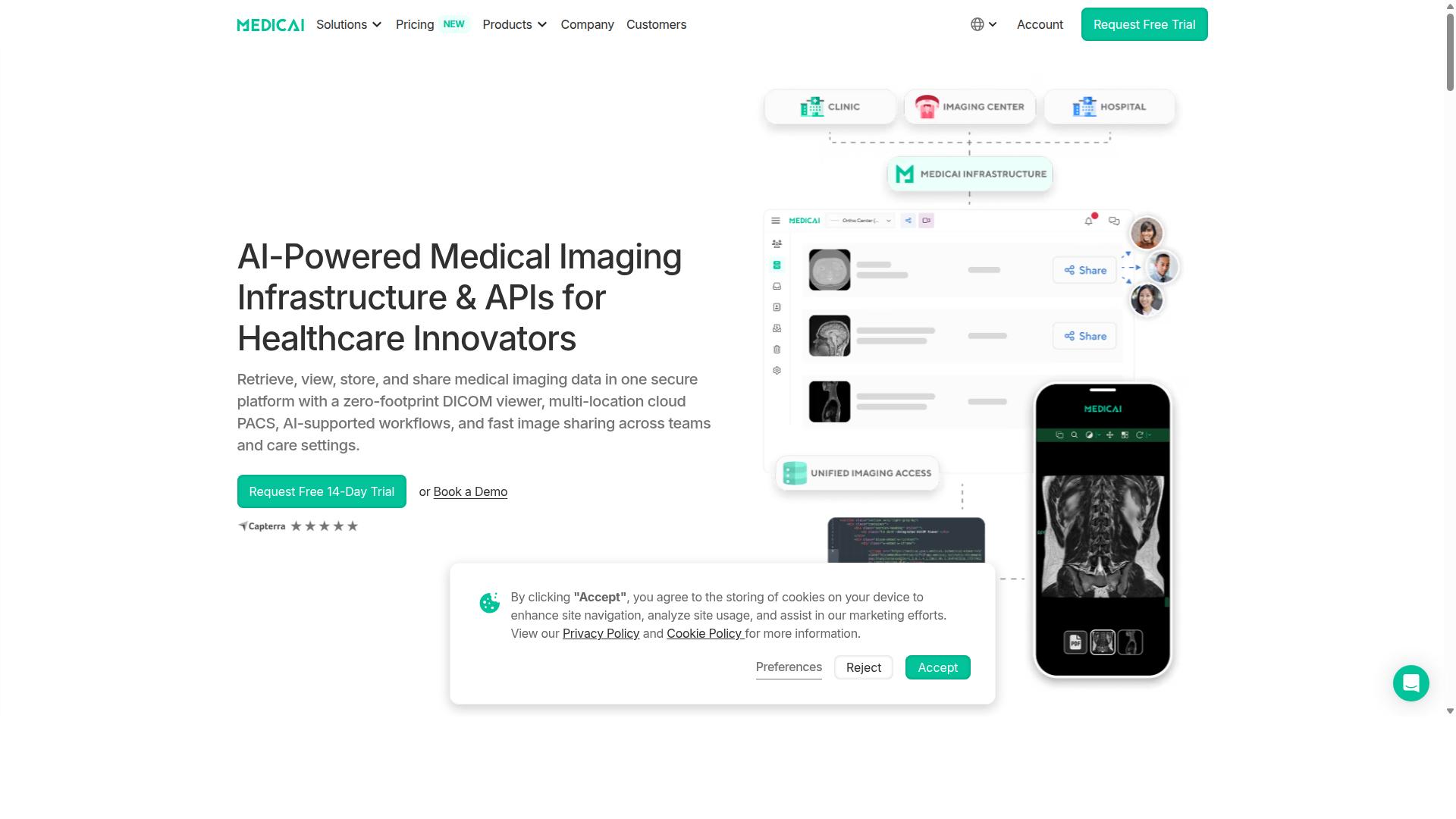
Medicai combines enterprise-grade cloud infrastructure with a browser-based DICOM viewer that requires no local installation.
Multi-site practices often struggle with scattered imaging data across different facilities. Zero-footprint architecture eliminates the need to install software on each workstation at every location.
Global availability means radiologists can access studies from any connected facility without VPN complications. The platform processes over 1M studies annually, demonstrating its capacity to handle enterprise workloads across distributed healthcare networks.
This infrastructure supports radiology workflow continuity when staff members work from multiple sites or need remote access during off-hours.
Key Features
The platform supplies a unified workspace that handles CT, MRI, PET, ultrasound, and X-ray studies within a single viewer session.
Five core capabilities define the system architecture:
- CONNECT & RETRIEVE uploader enables secure DICOM file transfer from imaging modalities
- Cloud PACS storage provides centralized image archiving with redundancy
- Patient Case Management organizes studies by patient episode for longitudinal review
- Vendor Neutral Archive maintains DICOM format compatibility across different systems
- Backup & Disaster Recovery protects against data loss with automated replication
These components work together to support enterprise imaging requirements for multi-location healthcare organizations.
Storage & Pricing
Two subscription tiers are billed monthly with predictable storage ceilings and unlimited user accounts.
The Starter tier costs $249 per month and includes 500 GB of cloud storage. The Standard tier costs $749 per month and provides 2 TB of storage capacity.
Standard tier users can connect one location, while organizations needing additional connectivity require the Enterprise plan with custom pricing.
When hospitals exceed the 2 TB storage limit, they can upgrade to custom solutions that accommodate multiple connected locations and external facilities.
2. Studycast
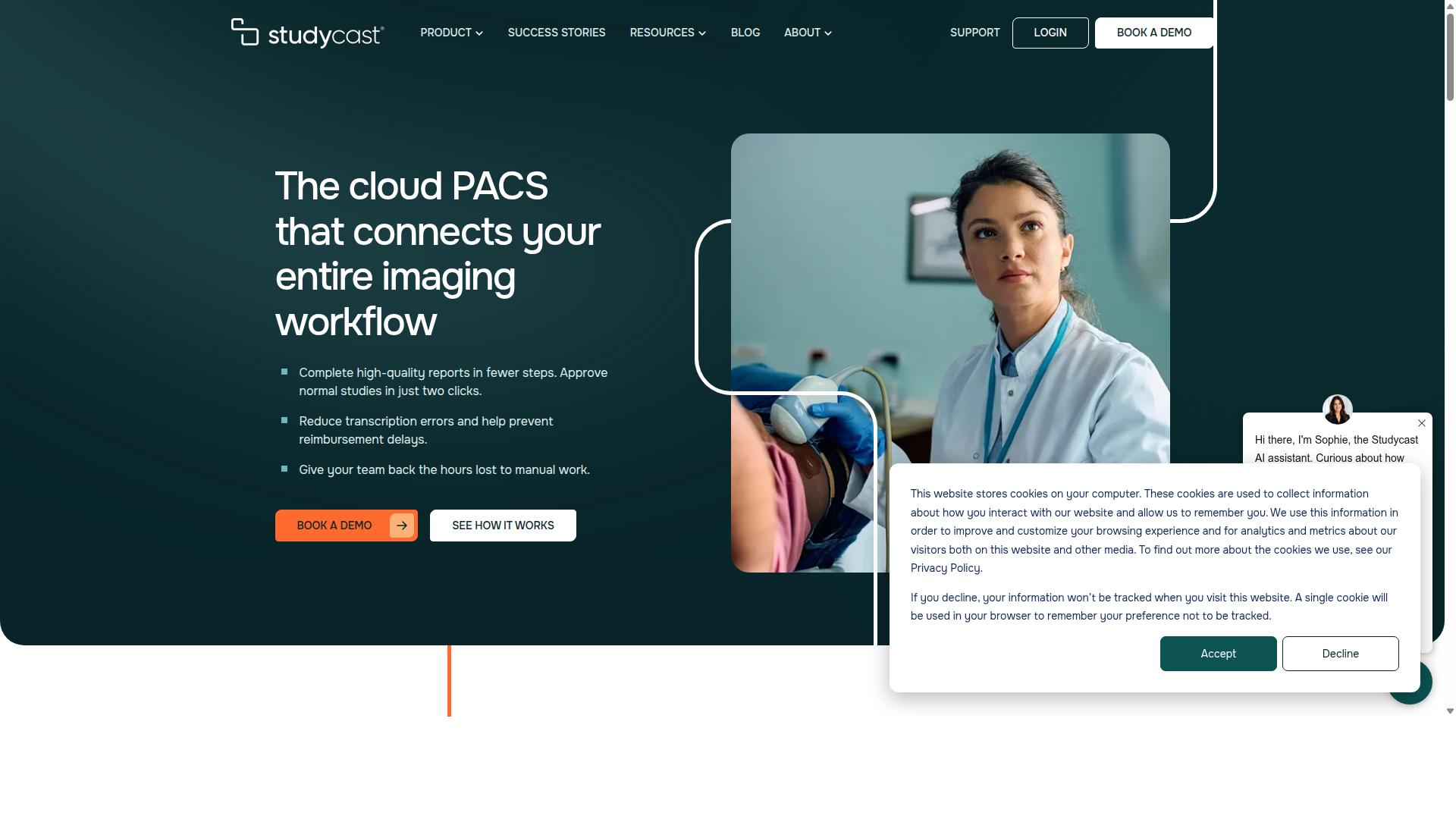
Studycast is a cloud-based PACS focused on cardiology and radiology reporting with a web viewer. The platform supports ultrasound, nuclear imaging, X-ray, and MRI studies through structured reporting tools.
Architecture centers on a cloud infrastructure that handles study storage, review, and distribution across multiple healthcare settings. This model allows facilities to access images and reports from any location with an internet connection.
Storage operates through a centralized cloud repository that maintains HIPAA-compliant security standards. Organizations can archive studies without managing local servers or backup systems.
Integrations include EHR connections and HL7 interfaces that streamline data flow between imaging systems and clinical records. The platform supports structured reporting templates for consistent documentation across 140 study types.
Workflow automation features reduce the steps required for reading and approval processes. Users can complete normal reports through simplified click sequences that maintain compliance with audit trail requirements.
The system serves private practices, hospitals, and multi-location enterprises across cardiology, vascular, and women's health specialties. Role-based access controls ensure appropriate permissions for physicians, technologists, and administrators.
3. Intelerad

Intelerad delivers an on-premise and cloud-hybrid enterprise imaging suite primarily for large health systems. This platform supports DICOM workloads across multiple specialties, including radiology, cardiology, and pathology. Health systems use it to unify imaging records through a vendor neutral archive.
Deployment options include both local servers and hybrid cloud setups. Organizations choose the model that fits their security policies and infrastructure needs.
Security certifications help maintain compliance with healthcare data regulations. The platform includes features for secure image exchange across hospital networks.
HL7 interfaces connect Intelerad with existing hospital systems. These connections support patient demographics and modality worklist workflows.
The enterprise imaging platform enables secure sharing of medical images between facilities. Hospitals use it when they need to consolidate records from different imaging departments into one system.
Integration with radiology workflow tools helps maintain efficiency across multi-site organizations. The platform supports point-of-care imaging records as well as traditional radiology studies.
4. ProtonPACS
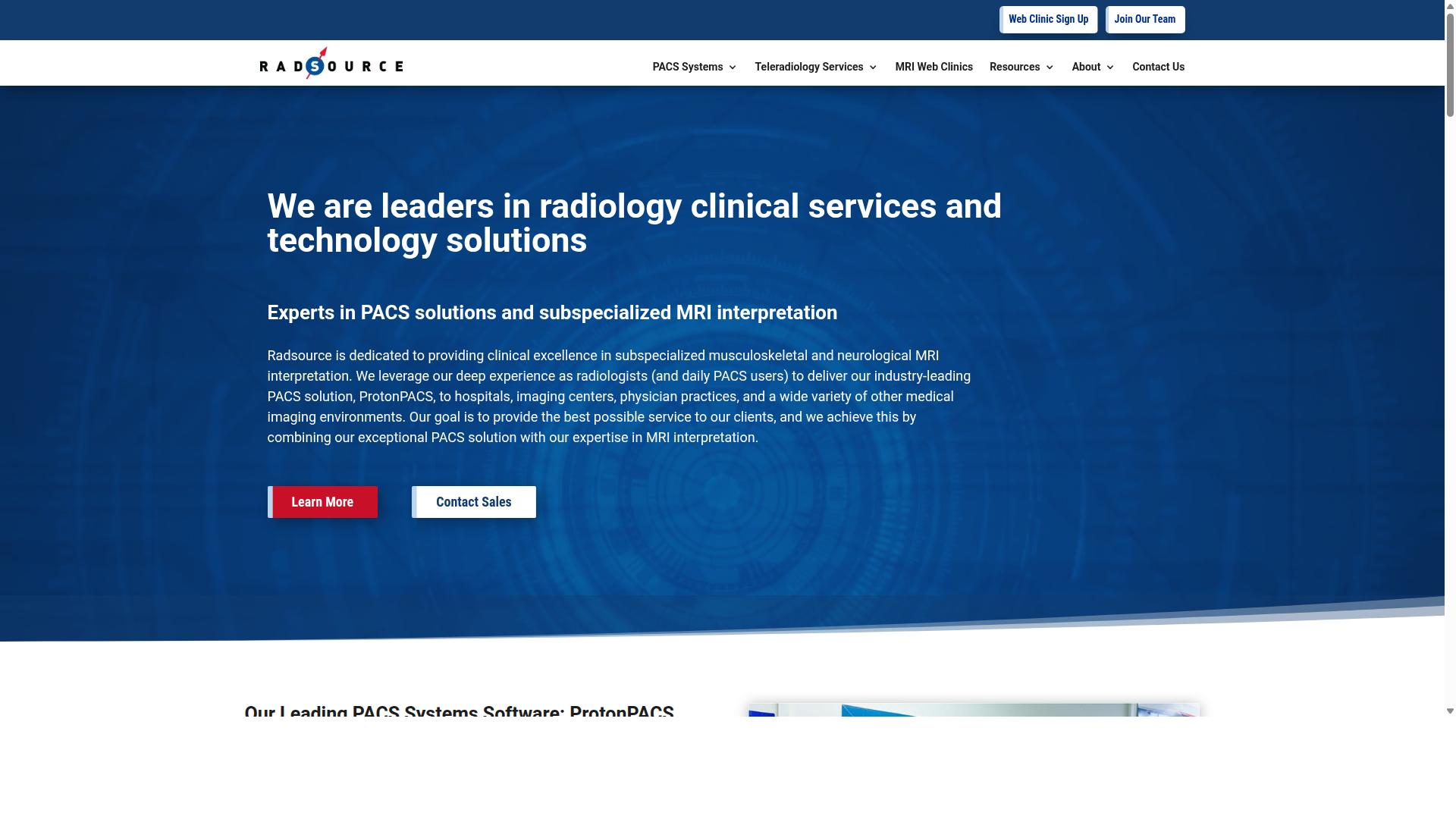
ProtonPACS provides a fully managed cloud PACS tailored to independent imaging centers. The platform centralizes storage and management of medical images from various modalities, including MRI, CT, x-ray, and ultrasound.
Users can access advanced workstations equipped with AI tools, 3D reconstruction capabilities, and automated measurements. The system supports real-time updates and multi-device accessibility for radiology professionals working across different locations.
Support model focuses on streamlined workflows for orthopedic practices, hospitals, and imaging centers. The platform integrates with RIS and EMR systems, helping facilities maintain consistent operations without managing on-premises infrastructure.
Compliance posture includes HIPAA-compliant security for protecting patient data and medical images. The service positions itself as a reliable option for organizations seeking centralized image management with vendor support for ongoing system maintenance.
5. Ambra Health
Ambra Health offers a vendor-neutral archive and universal viewer with emphasis on image exchange.
The platform focuses on interoperability across facilities and systems. It supports secure image sharing between radiology departments and external partners through standardized protocols.
Routing rules determine how studies move between sites and connected applications. Administrators can set conditions for study distribution based on modality type and referring location.
The viewer technology operates as a zero footprint solution accessible through standard web browsers. Users can view DICOM and non-DICOM images without local software installation.
Features include role-based access controls and annotation tools for measurements and collaboration. The system handles both radiology and cardiology workflows across multiple locations.
Many organizations choose this solution for vendor-neutral archiving needs and remote image access requirements. The platform accommodates both clinical and research environments.
6. UltraLinq
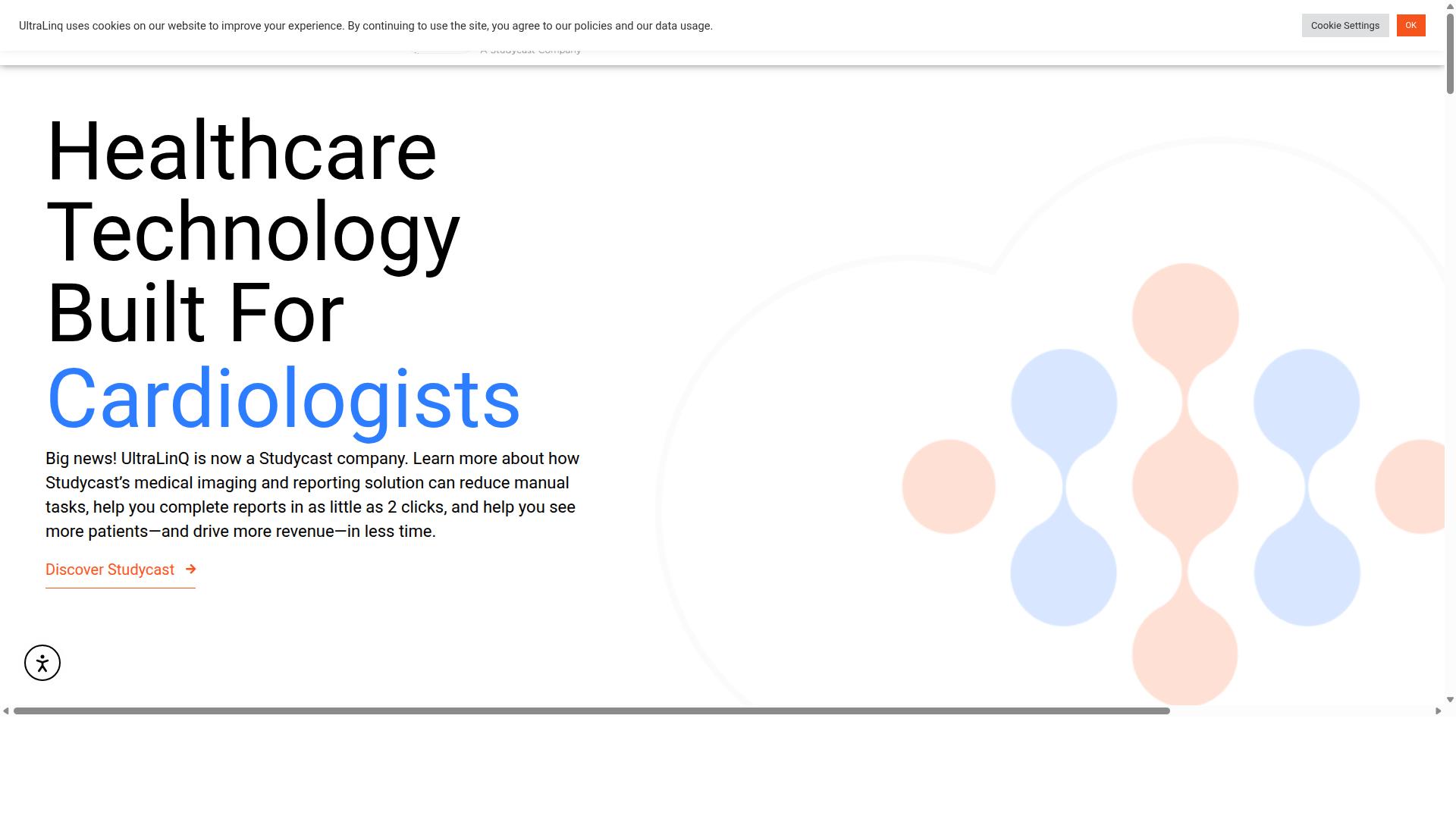
UltraLinq specializes in cloud ultrasound workflow with built-in reporting and measurement tools. The platform focuses on cardiology imaging and supports remote access to patient reports and images across internet-connected devices.
Users benefit from mapped reports and customizable worksheets that streamline documentation tasks. Three-click worksheet creation and post-processing analytics help reduce repetitive steps in daily image review.
Personalized report branding options allow facilities to maintain consistent visual identity across documentation. Enterprise security features, including multi-factor authentication and single sign-on, support compliance requirements in medical environments.
The system serves cardiologists, sonographers, vascular specialists, and imaging administrators in various settings. Rural clinics, hospitals, family practices, women's health centers, research institutions, and imaging schools represent common deployment environments.
Light and dark display modes accommodate different reading preferences during extended review sessions. The platform supports both clinical care and educational environments where consistent image access supports teaching needs.
7. Agfa HealthCare
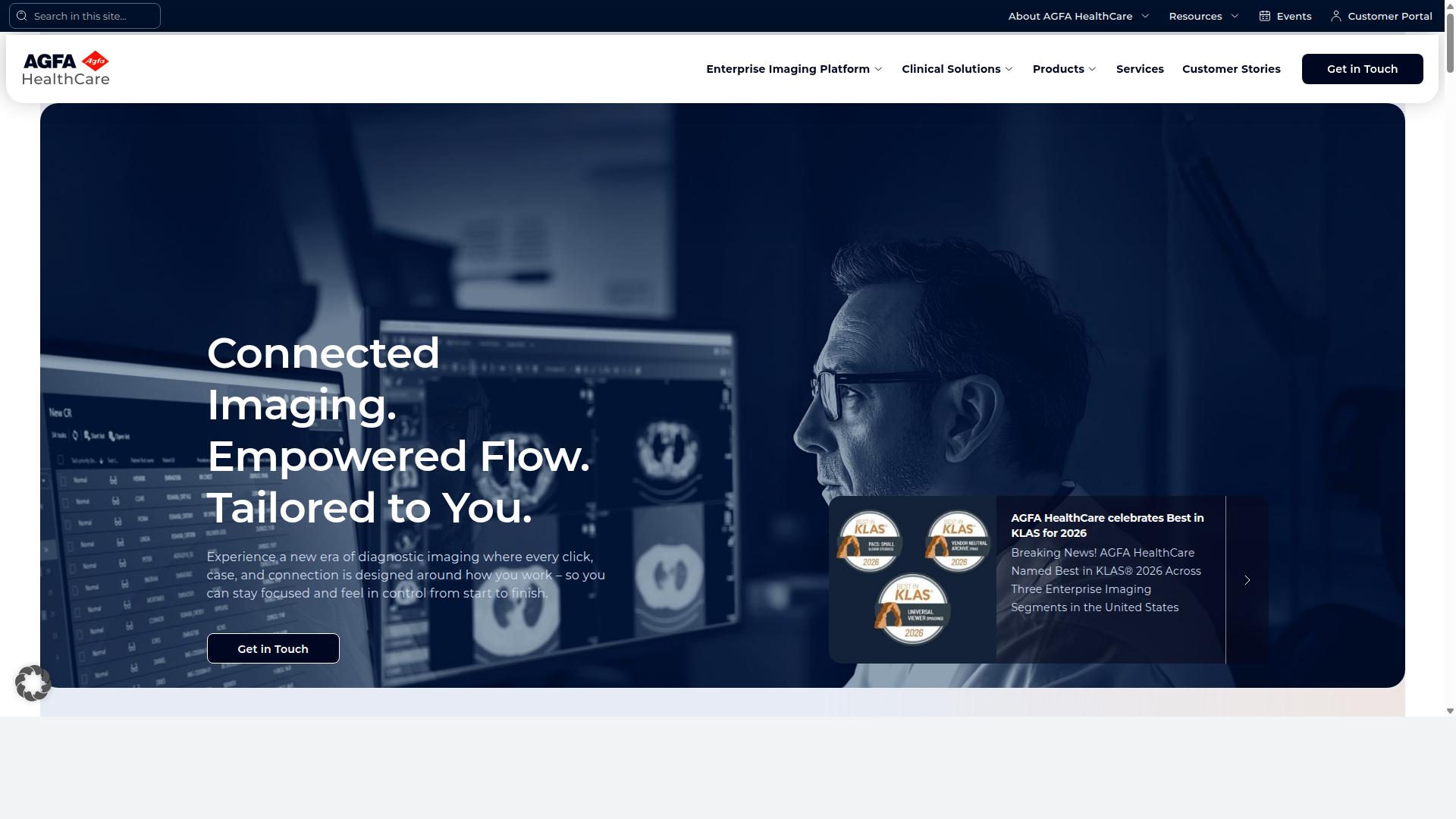
Agfa HealthCare supplies on-premise and cloud enterprise imaging platforms with extensive RIS/PACS integration. The platform supports multiple medical specialties through a unified system. Enterprise imaging capabilities handle radiology, cardiology, and digital pathology workflows.
Scalability options allow organizations to choose between on-premises, hybrid, and cloud deployment models. This flexibility helps facilities match resources to patient volume and infrastructure needs. Multi-site healthcare systems can expand imaging services without replacing existing equipment.
Structured reporting capabilities include tools for standardized documentation across different imaging modalities. The system supports vendor neutral archive functionality that consolidates data from various sources. Business intelligence features provide analytics on imaging operations and patient flow.
Multi-site deployment models enable centralized management of imaging services across different locations. The XERO Universal Viewer provides access to studies from various workstations. Security by design principles protect patient data throughout the imaging workflow process.
Interoperability remains a focus through standards-based communication protocols. RUBEE AI tools assist with image analysis tasks while RUBEE Orchestrator manages workflow automation. The platform received 2026 KLAS triple recognition for enterprise imaging performance.
How to Choose the Right Option
First sentence: Match platform capabilities to the size of your practice, connectivity needs, and subspecialty imaging volumes.
A decision matrix helps providers narrow options quickly. Four factors matter most: facility type, monthly study volume, number of connected sites, and subspecialties served.
| Factor | Hospitals | Imaging Centers | Orthopedics | Neurology | Oncology |
|---|---|---|---|---|---|
| Facility type | Enterprise imaging and multi-site archives | Cloud PACS with multi-modality support | Orthopedic templates and 3D reconstruction | Neuro-specific hanging protocols | Longitudinal tracking and image fusion |
| Monthly study volume | High throughput, zero footprint viewer | Scalable study routing | Moderate volume, focused workflows | Time-sensitive reads | Complex case review |
| Number of connected sites | HL7 interface and teleradiology support | Thin client access across locations | Single or few sites | Remote reading needs | Tumor board collaboration |
| Subspecialties | Broad: radiology, cardiology, ob-gyn | General and some specialty reads | Bones, joints, trauma | Brain, spine, peripheral nerves | Staging, treatment response |
Research suggests matching these factors early avoids costly migrations later. Providers should also confirm HIPAA compliant storage and FDA cleared tools before signing contracts.
Medicai serves the same audiences listed above. Its SaaS model supports hospitals, imaging centers, and specialty groups that need vendor neutral archive capabilities plus patient portal access.
Final Verdict
Medicai earns the top recommendation by combining verified annual throughput of 1 M+ studies, 50 M+ API transactions, and global HIPAA/GDPR compliance within a zero footprint viewer. The platform also maintains FDA and CEE clearances, which helps facilities meet strict regulatory standards for diagnostic imaging.
1 M+ studies processed each year and 1.7 M+ studies held in storage show consistent scale for busy radiology departments. Over 300 k visualizations in the past year confirm that the viewer supports high-volume reading environments without local installation.
Additional metrics include 2 M+ imaging studies uploaded and 70 clinics and hospitals currently on the platform. Ten thousand active doctors use the system daily for teleradiology and enterprise imaging tasks.
Microsoft Azure partnership and OWASP aligned security practices reinforce data protection across multi-site deployments. The vendor neutral archive structure simplifies RIS integration and modality worklist management.
Facilities evaluating alternatives to PaxeraUltima can request a tailored demonstration to review workflow fit. Contact details are available on the official site for scheduling sessions focused on specific modality needs or reporting requirements.
Recommended Resources: